
Last updated October 16, 2026
 Water damage drying
 Fire & smoke cleanup
 Mold remediation
 Storm response
 Sewage cleanup
 Reconstruction
Free visual inspection and a written scope of work before any mitigation begins - photos, moisture readings, and drying logs go in your claim file
The scope we write is the scope we bill. Anything new gets shown to you, in writing, before we touch it.
Get your free estimateDamage Restoration Warning Signs: A Miami Homeowner’s Reference Guide
Efflorescence. It’s a word most people never hear until they own a CBS home in Miami. Those white chalky streaks running down your stucco or block exterior look like a cosmetic nuisance, something to hose off next weekend. In reality, that chalk is dissolved minerals left behind after water moved through your concrete. It’s concrete telling you it has been saturated long enough to leach. Most Miami homeowners walk past it for ten years. By the time they notice the bigger problem, the repair bill has tripled. This guide is built for the specific ways water, humidity, and construction choices send warning signals in South Florida homes, signals that national guides written for wood-frame houses in drier climates simply miss.
Quick Answer
Water damage warning signs in a Miami home are often invisible on the surface because CBS (concrete block and stucco) construction hides moisture behind walls. The earliest reliable indicators are efflorescence on exterior walls, stucco bubbling or hairline stair-step cracks, ghost lines on ceilings from upstairs leaks, salt staining around window frames, and a consistent musty odor that worsens when the AC cycles. Any of these signals warrants a moisture meter reading within 48 hours to determine if the damage is active or historic.
Restoration work we handle
Table of Contents
- Efflorescence: What White Chalky Streaks on Stucco Actually Mean
- Stucco Bubbling and Hairline Cracks: Reading CBS Construction Damage
- Interior Warning Signs Specific to Miami Condos and Townhomes
- Using a Moisture Meter to Distinguish Active Damage from Old Stains
- The AC Condensate Line: Miami’s Hidden Second-Floor Flood Source
- Grey Water vs. Black Water: When a Small Leak Becomes a Contamination Problem
- The Miami Smell Test: Mold, Mildew, and One-Time Moisture Events
- Common Mistakes to Avoid
- When to Call a Professional
- Frequently Asked Questions
Efflorescence: What White Chalky Streaks on Stucco Actually Mean
Efflorescence is the single most misunderstood warning sign on Miami homes. It appears as white, powdery streaks or patches on stucco, block, brick, or concrete surfaces. The chemistry is straightforward: water enters the porous concrete or mortar, dissolves calcium hydroxide and other minerals inside the material, then carries those minerals to the surface as it evaporates. When the water leaves, the minerals remain and turn white. What looks like a cleaning issue is actually evidence of water moving through a structural material.
We have seen efflorescence on exterior walls in neighborhoods from Kendall to Miami Gardens that had been present for a decade before anyone investigated. Homeowners assume it’s salt spray from the ocean or harmless dust. Salt spray from coastal air can cause similar staining, but efflorescence has a distinct crystalline, fluffy appearance under magnification. Salt spray is more uniform and beads differently. The difference matters because efflorescence means water is entering from somewhere: a leaking roofline, failed window flashing, a cracked stucco coat, or rising damp through the slab.
The urgency of efflorescence depends on where it appears and how much. Efflorescence near the roofline suggests a roof flashing issue or clogged gutter draining directly onto the wall. Efflorescence near the base of a wall suggests rising moisture through the foundation or slab, which in Miami’s high water table areas can be chronic. Efflorescence around windows points to failed caulking or flashing. Efflorescence concentrated in one area that grows after rain is an active leak. Efflorescence that never changes size and flakes off easily may be historic, meaning the water source was fixed but the mineral staining remains.
Typical repair costs in Miami for addressing the underlying cause of efflorescence range from $300 to $4,500. A simple caulking and sealing job around a window runs $300 to $600. A roofline flashing repair runs $800 to $2,000. Re-pointing mortar joints on a block wall runs $1,500 to $3,500. If structural damage exists behind the stucco, which usually means removing and replacing a section of wall, the cost can exceed $4,500. The efflorescence itself can often be cleaned with a dry brush or diluted muriatic acid, but cleaning without fixing the water source is like painting over a termite trail.
Stucco Bubbling and Hairline Cracks: Reading CBS Construction Damage
CBS construction, concrete block and stucco, is the default building method for Miami single-family homes and townhomes. It handles hurricanes better than wood frame and resists rot, but it has a specific failure mode that national guides rarely mention. Stucco is a cementitious coating applied over block. When water gets behind the stucco, the bond between the stucco coat and the block begins to fail. The first sign is often bubbling: small rounded protrusions in the stucco surface that feel hollow when tapped. A small bubble the size of a quarter can hide a moisture pocket the size of a dinner plate.
Hairline cracks require more interpretation in Miami than elsewhere. All concrete cracks as it cures. A hairline crack that has been present since construction and never widens is often benign. But stair-step cracks, which follow the mortar joints in a block wall in a diagonal pattern, suggest movement or settlement and can create water entry points. Diagonal cracks radiating from window corners or door openings suggest stress that may be allowing water intrusion. The test we use is simple: mark the end of the crack with a pencil and check it in six months. If it has grown, you need an evaluation. If it hasn’t moved and no moisture is present behind it, monitor it.
Stucco damage in Miami carries one advantage over wood-frame markets: water behind stucco does not rot the wall. A block wall can be saturated and dried without losing structural integrity. That said, saturated block in an air-conditioned home creates a dew point problem. Moisture behind the stucco migrates inward, meets the cooler interior wall surface, and condenses. What starts as an exterior leak becomes interior dampness, peeling paint, and eventually mold inside wall cavities. For more detail on how Miami’s climate affects interior water damage, see our guide on Water Damage Restoration in Miami.
Typical evaluation of stucco bubbling or concerning cracks runs $150 to $400 for a moisture inspection with an infrared camera and probing moisture meter. Repair of a localized stucco failure area runs $800 to $1,800. Full wall re-stucco after widespread bond failure can run $8,000 to $25,000 depending on square footage and access. In our experience across Miami, early intervention at the bubbling stage costs about one-tenth of what remediation costs after mold has established behind the wall.
Interior Warning Signs Specific to Miami Condos and Townhomes
Condo and townhome owners in Miami face a set of warning signs that single-family homeowners rarely encounter. The most common is the ghost line, a faint yellowish or grey outline that appears on a ceiling without an obvious source. Ghost lines form when water from an upstairs unit’s plumbing leak or AC overflow travels along a ceiling joist or drywall seam, evaporates, and leaves mineral deposits. The line is often the same pattern as the framing above, which is why it looks like a shadow or an old stain. If you see a ghost line that slowly widens after rain or upstairs neighbor activity, the leak is active.
Salt-corrosion staining around window frames is another Miami-specific signal. Coastal air combined with condensation on window glass creates a mild saltwater solution that runs down the frame and onto the sill. Over time, the aluminum or vinyl frame develops white or greenish crust, and the drywall below the window gets stained. This can look like water damage from a leak, and sometimes it is accompanied by an actual leak from failed window sealant. But in many Miami condos within two miles of Biscayne Bay, salt corrosion staining is environmental and not an active leak. The distinction requires a moisture meter reading, which we cover below.
The third interior signal is the smell. We will cover this in depth later, but condos and townhomes have a specific tell. Because multiple units share walls and HVAC systems vary by building, a musty odor in a condo may originate from the neighboring unit’s water damage, not your own. Shared wall cavities allow odors to migrate. If the smell improves when your AC runs and worsens when it’s off, the source is likely inside your unit. If the smell is constant regardless of your AC, check adjacent units and common areas. For more on odor sources and remediation, see our guide on Mold Remediation in Miami.
Typical costs for interior water stain investigation in a Miami condo run $200 to $500 for a comprehensive inspection that includes moisture readings in the affected area and adjacent cavities. Ghost line removal and ceiling repainting runs $400 to $900 after the leak source is fixed. Window frame sealing runs $200 to $700 per window depending on access and frame condition.
Using a Moisture Meter to Distinguish Active Damage from Old Stains
A moisture meter is the single most useful tool a Miami homeowner can have for talking to insurance adjusters with confidence. These devices measure the moisture content of building materials using either pin probes that penetrate the surface or pinless sensors that read through the material electromagnetically. Inexpensive pinless models cost $25 to $60 at home improvement stores and are accurate enough to distinguish between a wet wall and a dry one. Professional models used by restoration crews run several hundred dollars and can measure moisture through stucco, tile, and drywall with precision.
Here is how to use a moisture meter to determine if a stain is active or historic:
- Calibrate the meter on a known dry area of the same material: an interior wall in a different room, a ceiling section away from the stain. Record that baseline reading as your reference.
- Take readings directly on the stain, then in a ring around the stain at 6-inch intervals, then on the opposite side of the same wall or ceiling if accessible.
- Compare the readings. A reading within 1 to 3 points of your dry baseline means the area is dry and the stain is historic. A reading 5 to 15 points above baseline means elevated moisture. A reading that pegs the meter’s maximum indicates saturation.
- Repeat the test 24 hours after a rain event. Active leaks will show increased moisture after rain. Historic stains will not change.
- For ceiling stains in condos, take readings while the upstairs neighbor is running water (shower, laundry, dishwasher). Some leaks only manifest under specific water-use conditions.
What readings constitute a problem? Most drywall in a Miami air-conditioned home reads 8 to 12 percent moisture. Wood framing reads 10 to 15 percent. Masonry reads 10 to 20 percent depending on the season. Readings above these ranges indicate water presence. In our experience in Miami’s humid season, a reading of 18 percent on drywall is the threshold where mold growth becomes likely within 24 to 48 hours if not dried. A reading of 25 percent or higher means active saturation.
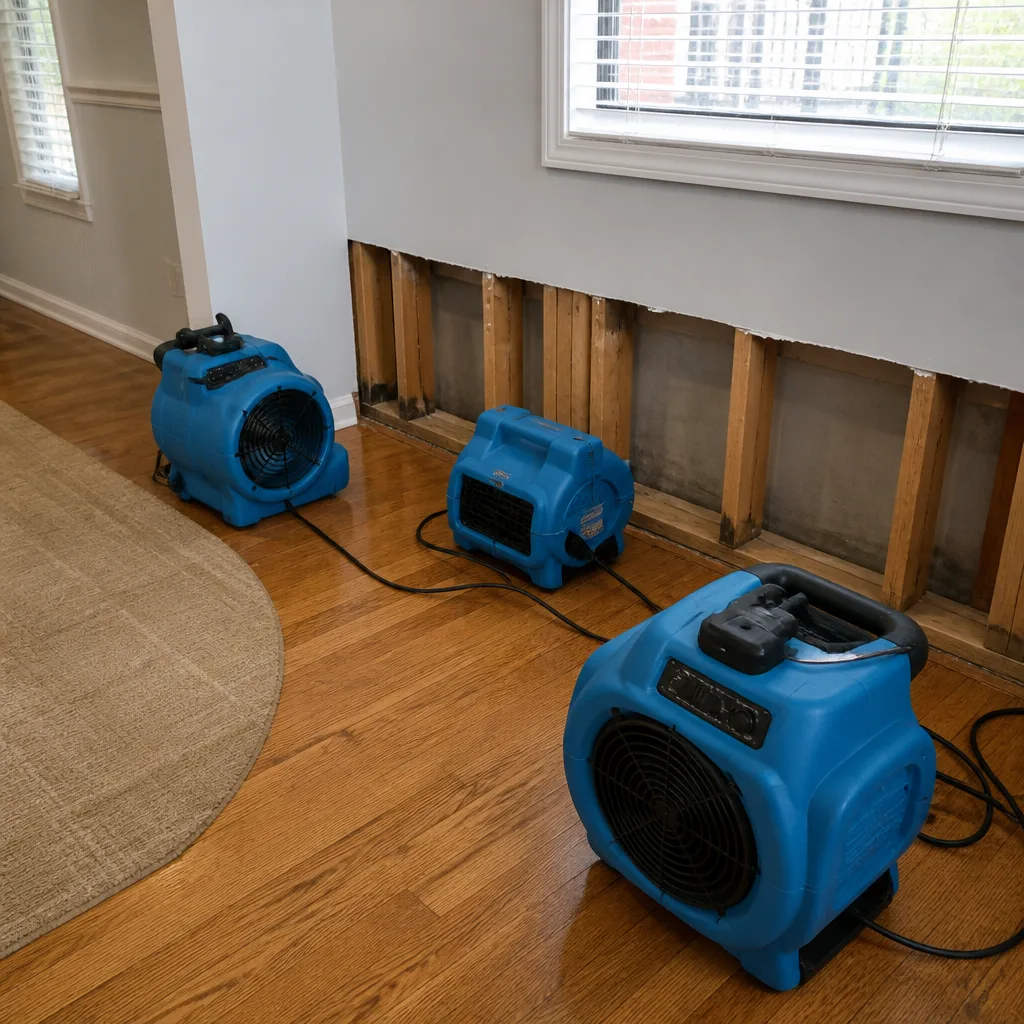
This process gives you a documented, dated record that helps with insurance claims. When an adjuster visits, you can say “this wall read 24 percent moisture with a calibrated meter on Tuesday after the storm” rather than “I think it’s wet.” That documentation changes the conversation. Most adjusters respond to specific measurements. If your claim involves structural drying, restoration crews use the same principle, just with commercial-grade equipment like Dri-Eaz and Phoenix dehumidifiers and high-velocity air movers.
The AC Condensate Line: Miami’s Hidden Second-Flood Source
Every air conditioning system in Miami produces gallons of condensate water every day. The evaporator coil pulls humidity from the air as it cools, and that water drips into a drain pan, then flows through a PVC condensate line to a drain or outside. When that line clogs, which it inevitably does in Miami’s climate because algae grows inside the warm, wet PVC, the water has nowhere to go. The drain pan fills. Then it overflows.
This is one of the top causes of water damage in Miami townhomes and second-story rooms. The pattern is predictable: a water stain appears on the ceiling below the AC unit or on the wall adjacent to the air handler closet. The stain grows slowly at first, then rapidly during hot weeks when the AC runs continuously. By the time the homeowner notices, the ceiling cavity has been wet for weeks.
Where to check: the primary drain pan sits directly under the indoor air handler unit, usually in a closet, attic, or utility room. In many Miami homes built before the mid-2000s, the air handler is in the garage or a closet and the condensate line runs through the wall. Newer homes put air handlers in the attic. The pan itself is typically a shallow metal or plastic tray. If you see water standing in the pan, the line is clogged. If the pan is overflowing or shows a water line mark near the top, it has been overflowing.
Clogged condensate line repair costs $100 to $250 for a simple drain line flush. If the overflow has soaked drywall or ceiling material, drying and repair adds $500 to $1,500. If the AC system has been leaking long enough to cause mold in the ceiling cavity, remediation and reconstruction can run $2,000 to $6,000. The prevention is simple: pour a cup of white vinegar or a commercial condensate line cleaner into the drain line every 6 months. It dissolves the algae before it becomes a clog. Many Miami HVAC companies offer condensate line maintenance for $75 to $150 per visit as part of a seasonal tune-up.
Grey Water vs. Black Water: When a Small Leak Becomes a Contamination Problem
The restoration industry categorizes water damage by contamination level, and the category changes everything about how a job is handled and priced. Category 1 is clean water: supply lines, faucet overflows, rainwater. Category 2 is grey water: washing machine discharge, dishwasher overflow, AC condensate that has sat for more than 48 hours and begun growing bacteria. Category 3 is black water: sewage backups, toilet overflows containing waste, flood water from outside, any grey water that has sat for more than 72 hours.
The category matters because it dictates the scope of work. Clean water damage can often be dried in place with air movers and dehumidifiers. Grey water requires removing and discarding affected porous materials like carpet, pad, and saturated drywall, then disinfecting hard surfaces before drying. Black water requires full removal of all affected materials, disposal of some contents, and full disinfection of structural framing. Costs scale accordingly.
Typical Miami restoration costs follow the categories:
- Category 1 (clean water): $1,200 to $3,500 for drying, dehumidification, and minor repairs in a single room. Materials like baseboards and drywall may be saved if dried within 48 hours.
- Category 2 (grey water): $2,500 to $7,000 for a single room. Carpet, pad, and saturated drywall are typically removed. Disinfection is required. Contents may need cleaning.
- Category 3 (black water): $5,000 to $15,000 or more for a single room. Full containment, disposal of affected materials, structural disinfection, and occasionally subfloor or framing treatment. Personal contents are often unsalvageable or require specialized cleaning.
The warning sign that a category upgrade has occurred is often subtle. An AC overflow that happened last week and sat in the carpet is likely Category 2 by now: warm, stagnant water grows bacteria quickly in Miami’s heat. A toilet overflow in a ground-floor bathroom that backed up from a main line clog is immediately Category 3. If you have any doubt about the category of water in your home, treat it as the higher category until a professional evaluates it. Drying a black water spill without proper disinfection creates a lasting health problem. For more on how contamination affects restoration scope, see our guide on Water Damage Restoration in Miami.
The Miami Smell Test: Mold, Mildew, and One-Time Moisture Events
Miami homes develop smells that homes in other climates never do. The distinction between mold, mildew, and a one-time moisture event matters because each requires a different response and a different budget. Mildew is a surface fungus that grows on damp surfaces: shower tile grout, window sills, the inside of a washing machine door gasket. It smells sour and flat, and it dies quickly once the surface is cleaned and dried. Mildew removal is a homeowner cleaning task that costs pennies.
Mold is different. Mold penetrates porous materials: drywall, carpet pad, cabinet bases, subfloor. Mold emits a smell that most people describe as earthy or musty, similar to rotting leaves or wet cardboard. The smell intensifies when the material is disturbed and often worsens when the AC runs, because the system circulates air and the odor compounds. Mold in a wall cavity may not be visible, but the smell is consistent and present every day, not just after rain or shower use.
A one-time moisture event, like an overturned beverage or a single leak that was quickly dried, produces a stale smell that fades within a week. It does not have the persistent, penetrating character of mold. The timeline rule we use in Miami: if the smell has persisted for more than two weeks despite cleaning and dehumidification, assume mold is present somewhere hidden.
Mold inspection and testing in Miami runs $300 to $600 for a comprehensive assessment with air sampling and surface swabs. Mold remediation in a contained area like a bathroom or closet runs $1,500 to $4,000. Whole-room remediation with containment runs $3,000 to $8,000 depending on square footage. For more on what remediation involves, see our guide on Mold Remediation in Miami.
Common Mistakes to Avoid
- Painting over water stains without addressing the source. A primer and paint coat will hide a ceiling stain for six months. The moisture behind that stain is still there, still feeding mold, still spreading. Paint is cosmetic; the problem is structural.
- Running a household fan to dry standing water. Household fans move air but do not remove humidity. In Miami’s ambient humidity, a fan can actually spread moisture deeper into walls and furniture. Professional drying uses dehumidifiers (Dri-Eaz, Phoenix, XPOWER, B-Air) that pull water from the air while air movers push saturated air out of materials.
- Ignoring the AC condensate line because the AC “seems fine.” The condensate line is the most common source of hidden water damage in Miami townhomes. By the time the ceiling shows a stain, the ceiling cavity has been wet for weeks.
- Treating all water as clean water. A leak that looks clear but has been sitting for 72 hours is Category 2 or 3. Disinfecting matters as much as drying. Skipping this step saves money today and creates a recurring problem.
- Waiting for insurance approval before starting mitigation. Most insurance policies require the homeowner to mitigate ongoing damage immediately. Waiting days for an adjuster while water sits can invalidate coverage. Document everything with photos, then start drying.
- Sealing a wall with efflorescence using waterproof paint. Waterproof paint traps moisture inside the block, which accelerates deterioration behind the coating. Efflorescence needs the water source addressed, not the surface sealed.
- Dismantling stucco yourself to investigate a bubble. Poking a hole in a stucco bubble to see what’s behind it can release a pocket of saturated material that then spreads moisture across a wider area. A professional investigation uses moisture mapping to find the extent of damage without opening the wall unnecessarily.
When to Call a Professional
Some warning signs are safe to monitor and some require immediate professional attention. Call a restoration professional the same day if you see water actively flowing from a ceiling, wall, or AC overflow; if a ceiling is sagging or bulging; if you can smell sewage; or if a water stain appears suddenly and expands within hours. Call within 48 hours if you notice new efflorescence after rain, a stucco bubble that feels soft, or a musty smell that persists for more than two weeks. Dryden Restoration Miami offers free estimates throughout Miami. We answer every call with a live person, and our technicians arrive in uniform with a written scope of work before any tool is touched. Call (850) 533-8588.
Frequently Asked Questions
In Miami’s climate, visible signs like staining or bubbling typically appear within 48 to 72 hours for active leaks. Hidden damage behind stucco or inside wall cavities may not show visible signs for weeks or months, which is why moisture meter readings are more reliable than visual inspection for early detection.
Efflorescence itself is not structural damage, but it indicates water has been moving through your masonry. The underlying cause may be minor (failed caulking) or serious (roof flashing failure, slab moisture intrusion). A moisture inspection can determine the source and whether immediate repair is needed.
Open windows and household fans are rarely sufficient in Miami’s high-humidity climate because ambient air is already saturated. Professional drying requires commercial dehumidifiers, like Dri-Eaz and Phoenix units, that remove moisture from the air while air movers push saturated air out of building materials. Improper drying often leads to mold within one to two weeks.
Grey water comes from washing machines, dishwashers, and AC condensate that has sat for more than 48 hours. Black water contains sewage, flood water from outside, or grey water that has sat for more than 72 hours. Category affects both cost and cleanup approach, so have a professional evaluate anything you are unsure about.
Most homeowner’s policies cover sudden and accidental water damage, such as a burst pipe or AC overflow. Flood damage from rising water requires separate flood insurance. Gradual damage from long-term leaks is often excluded. Document everything with photos and moisture readings before the adjuster arrives, and start mitigation immediately, because delaying can reduce your claim.
Take a photo with a timestamp, place a bucket under any active dripping, and use a moisture meter to check the area. If the stain is wet or growing, call a restoration professional the same day. If the stain is dry and stable, schedule an evaluation within the week. Do not poke a hole in the ceiling to investigate, because releasing trapped water can spread damage.
The Bottom Line
Miami homes warn you before they fail. Efflorescence on the stucco, a ghost line on the ceiling, a persistent musty smell, a clogged AC condensate line, a bubble in the stucco coat: each is a signal that water is somewhere it should not be. The challenge is that South Florida construction hides water damage better than almost any other regional building style. The humidity masks smells, the block walls hide saturation, and the stucco coat conceals cracks behind a uniform surface. Homeowners who learn to read these signals catch repair costs at $500 instead of $8,000. Those who wait until the damage is visible have waited too long. For a comprehensive evaluation of any warning sign in your Miami home, Dryden Restoration Miami home is a good starting point. We also offer Fire Damage Restoration in Miami for homes affected by smoke or fire events alongside water damage.
Written by Carl Brandt, Owner at Dryden Restoration Miami, serving Miami since 2005.
See the difference
 Before
 After
After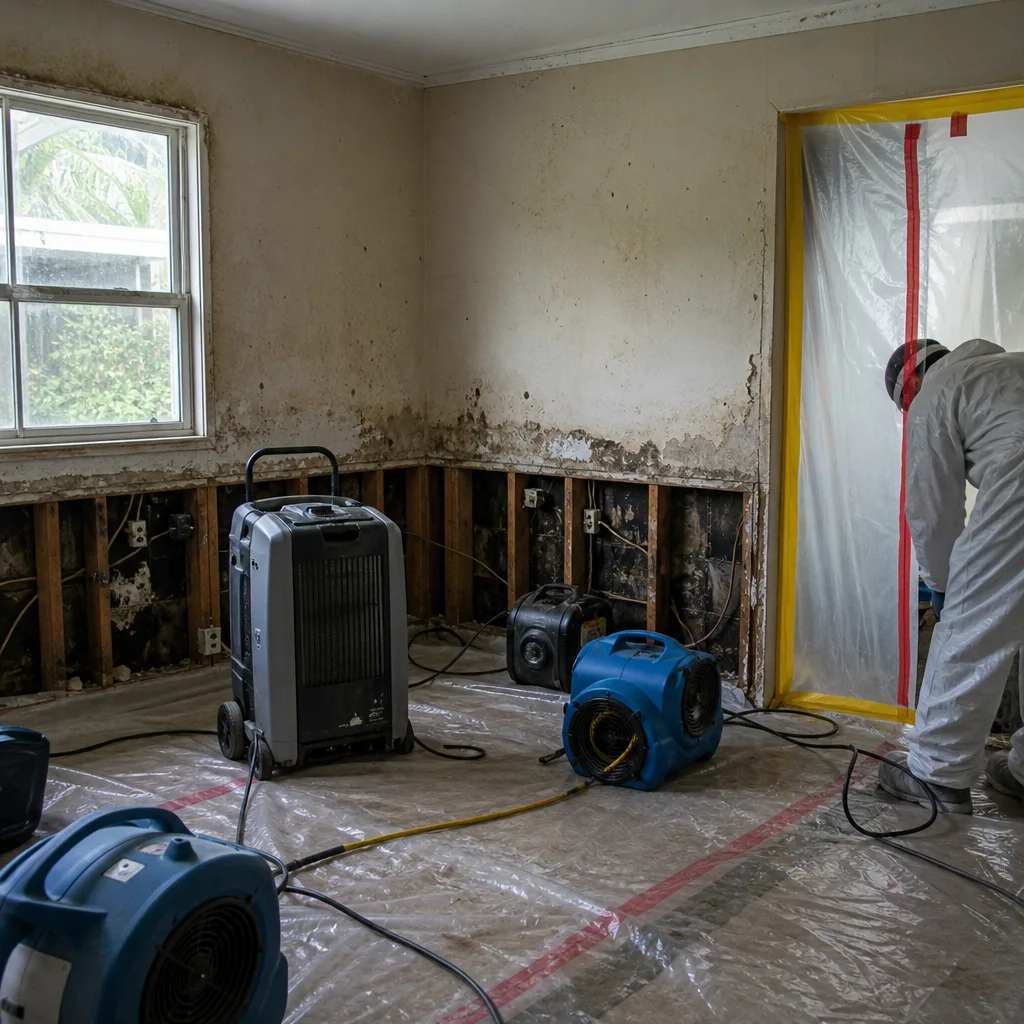 Before
 After
After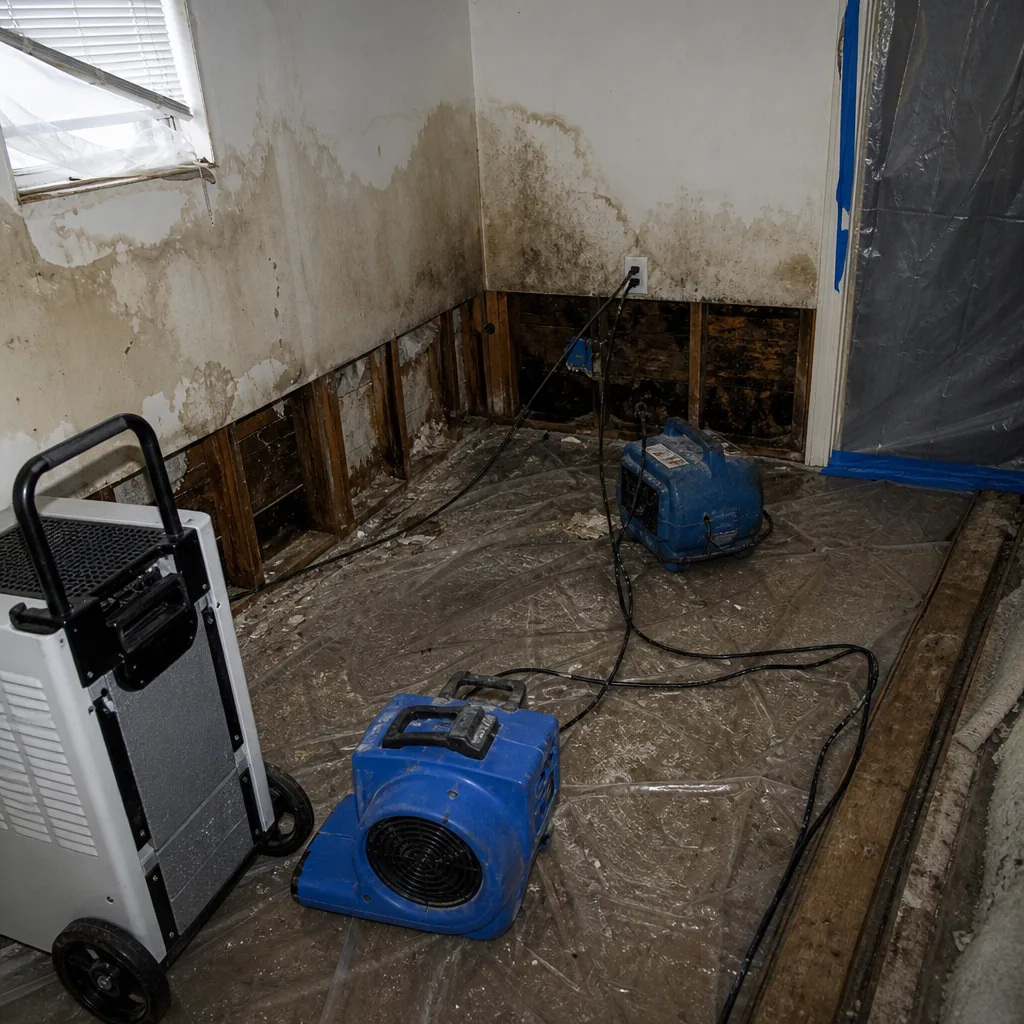 Before
 After
After