
Last updated October 16, 2026
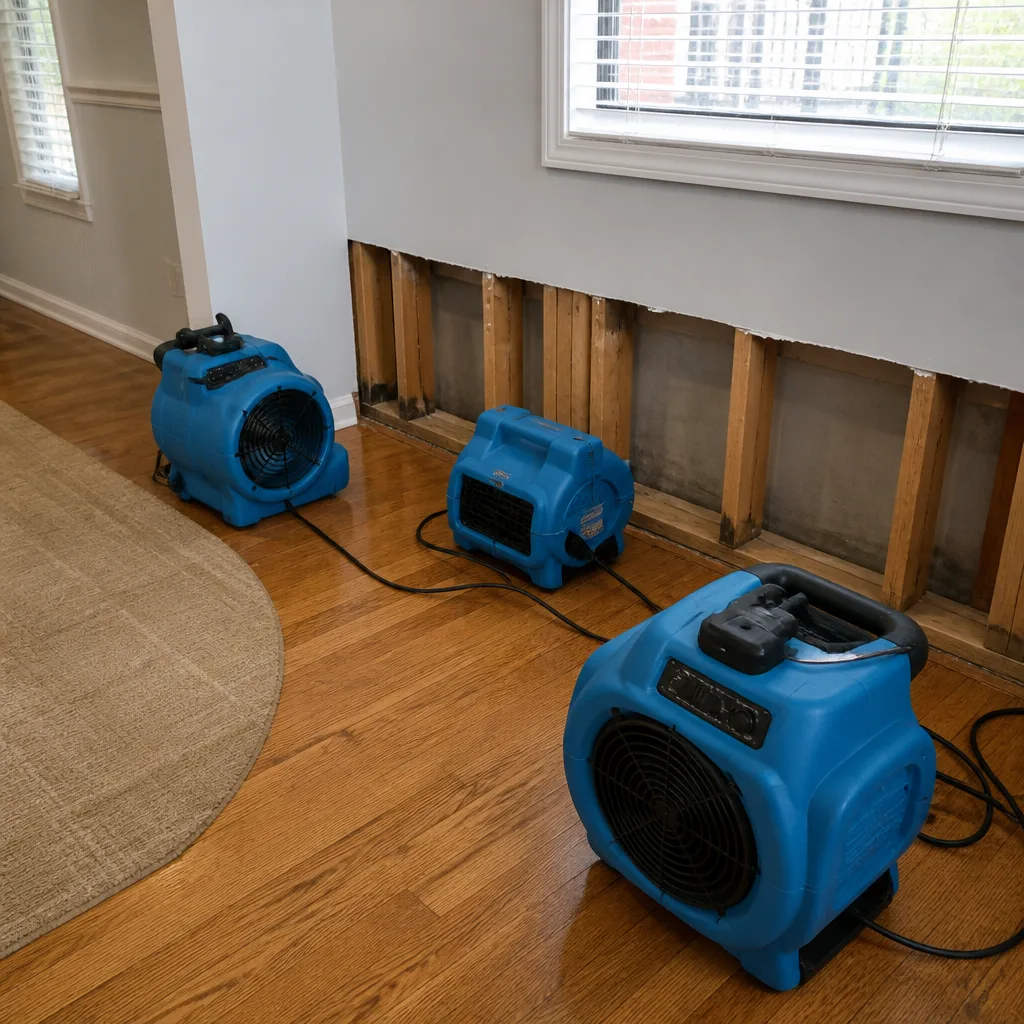 Water damage drying
 Fire & smoke cleanup
 Mold remediation
 Storm response
 Sewage cleanup
 Reconstruction
Free visual inspection and a written scope of work before any mitigation begins - photos, moisture readings, and drying logs go in your claim file
The scope we write is the scope we bill. Anything new gets shown to you, in writing, before we touch it.
Get your free estimateSeasonal Damage Restoration Care for Miami: Year-Round Homeowner’s Guide
Miami’s “dry season” is a relative term. December through April still pushes indoor humidity to roughly 40 percent without air conditioning running, and that’s exactly when condensate line clogs and hidden mold from summer go undetected the longest. Most homeowners in Miami wait for a visible leak or a named storm before thinking about water damage. This guide flips that calendar on its head. You’ll learn the two real damage windows Miami actually has, the month-by-month inspection rhythm that catches problems early, and the specific signs your home gives you before water becomes a repair bill.
Restoration work we handle
Quick Answer
Seasonal water damage prevention in Miami means tracking two distinct windows: hurricane season (June through November) and the dry-season stress period (December through April) when AC systems and indoor humidity swings create hidden problems. A working prevention calendar for Miami homes includes a May pre-hurricane inspection, a September mid-season review, a November post-season assessment, and a February dry-season AC and humidity audit. Most damage we see in Miami homes traces back to missed inspections in one of those four months.
Table of Contents
- Miami’s Real Seasons: Two Damage Windows, Not Four
- The Month-by-Month Miami Inspection Calendar
- Why the Dry Season Is Peak Time for Hidden Mold Discovery
- Hurricane Shutters and Impact Windows: The Water-Intrusion Angle
- Dry-Season Humidity Swings and the Cracks They Leave Behind
- Roof-to-Wall Connections in Miami-Dade’s Wind-Borne Debris Region
- Common Mistakes to Avoid
- When to Call a Professional
- Frequently Asked Questions
- The Bottom Line
Miami’s Real Seasons: Two Damage Windows, Not Four
Most seasonal home-maintenance advice is written for houses with basements, freezing pipes, and furnace filters. Miami has none of those. What Miami does have is a six-month hurricane season where wind-driven rain tests every seal, flashing, and caulk joint on the structure, followed by a six-month dry season where the AC runs constantly and moisture hides in places nobody looks until the smell gives it away.
Think of it this way: hurricane season is when water tries to get in from the outside. The dry season is when water problems grow from the inside. Both windows demand different inspections, different tools, and different habits. A homeowner who only thinks about water damage in September is half-prepared. That’s the core idea behind the Dryden Restoration Miami home approach to seasonal care: the calendar you follow matters more than the volume of work you do.
Hurricane season in Miami runs officially from June 1 through November 30. The peak threat window is mid-August through late October, when Gulf water temperatures are at their highest and storm formation is most active. But the first named storm can arrive in early June, and the last one has been known to straggle into November. The dry season, which runs December through April, brings lower outdoor humidity but not no humidity. It’s a shift from “very humid” to “moderately humid,” and that moderate reading is deceptive because indoor environments behave differently than Miami’s ambient outdoor air.
The Month-by-Month Miami Inspection Calendar
Here is the calendar we recommend to homeowners across Miami, with more guides & resources available on our blog. It’s built around South Florida’s actual climate patterns, not generic spring-and-fall advice that makes more sense in Atlanta or Charlotte. Each month has one job, and that job takes less than an hour.
February: The dry-season AC audit. Your air conditioner has been running hard since November. The condensate drain line, which carries away the gallons of water your AC pulls from Miami’s humid air, is the single most common source of interior water damage we see in dry season. Inspect the drain line for clogs by checking for standing water in the drip pan and looking for water stains on the ceiling below an attic-mounted air handler, as detailed in our Water Damage Restoration Maintenance Checklist for Miami Homeowners. While you’re there, check the relative humidity (RH) inside your home with a basic hygrometer, a device that measures moisture in the air. If indoor RH reads above 60 percent, your AC is not dehumidifying properly. That’s a warning sign for mold growth behind walls and under flooring.
May: Pre-hurricane preparation. One month before the official start of hurricane season. Walk the full exterior perimeter. Look for lifted shingles, cracked or missing caulk around window and door frames, gaps where exterior walls meet the roofline, and any tree limbs within 6 feet of the roofline that could scrape or impact during heavy wind. Clean gutters, downspouts, and the storm drain at the end of your driveway if you have one. Check that downspout extensions carry water at least 4 feet away from the foundation slab. In Miami’s flat topography, even 2 inches of ponding against a slab can find its way in through hairline cracks.
September: Mid-season review. By now, you’ve probably experienced at least one heavy rain event or a close pass from a tropical system. Walk the interior of your home after the next hard rain. Look specifically at the ceiling edges, window sills, and the floor line where exterior walls meet the slab. Touch the drywall near the floor in the garage and any ground-level storage closets. If it feels cool or soft, water has wicked up or intruded through a gap. September is also when we see a spike in AC overflows, because the condenser has been running at full capacity through Miami’s hottest months, and a partially blocked line finally backs up all the way.
November: Post-season assessment. Hurricane season ends, and this is the moment to inventory what the season did to your home. Walk the exterior again. Look for the same things you checked in May, but now look for damage caused by wind, debris, and repeated saturation: cracked stucco, displaced sealant, rusting fasteners, sagging gutters. Then walk the interior with a flashlight and a step stool. Check crown molding joints, ceiling corners, and closet ceilings for faint brown outlines, which signal a slow leak that has dried and stained. In Miami’s dry season, these stains can sit unnoticed for months, and by the time you see them, the wood behind the drywall has already begun to decay.
We’ve kept this to four months so it’s actually doable. You can add a quick visual check during any month, but these four inspections catch the damage patterns that cost Miami homeowners the most money. For more on what a full inspection involves, see our guide to Water Damage Restoration in Miami.
Why the Dry Season Is Peak Time for Hidden Mold Discovery
Here’s what surprises most Miami homeowners: we get more mold-related calls in January and February than in August and September. The reason is simple. During the humid summer months, mold grows inside wall cavities and under flooring where the conditions are warm and wet, but the clues are masked by everything else going on, open windows, rain, general dampness. When the dry season arrives, the surfaces outside and in the common living areas dry out. The contrast makes hidden mold easier to detect.
The visual indicator to check on interior walls in January and February is a phenomenon called ghost staining or shadow blotching, where faint gray-brown outlines appear on painted drywall, especially on walls that back up to bathrooms, kitchens, or exterior stucco. These stains are the dried residue of water that has wicked through the drywall from behind. In Miami’s dry season, the water evaporates and leaves mineral deposits plus mold spores behind. It looks like a faint watermark that won’t wipe away. If you see this on a wall, there is a moisture source behind that drywall, and the mold is likely already established.
Another dry-season signal is a musty odor that appears when you turn on the AC after it’s been off for a few days. That smell is not “normal AC odor.” It’s the scent of microbial growth inside your ductwork or air handler, and it gets stronger in the dry season because the AC is pulling air across the same colonized surfaces all day. If you notice the smell when the system first starts, then it fades after a few minutes of running, that pattern points to condensation inside the unit, not a one-time spill. It needs professional attention. Our Mold Remediation in Miami service addresses exactly this kind of hidden dry-season growth.
The takeaway: don’t assume the dry season means mold season is over. In Miami, the dry season is mold discovery season, and finding it in January is far cheaper than finding it in July after it’s spread through a larger area.
Hurricane Shutters and Impact Windows: The Water-Intrusion Angle
Most Miami homeowners think of hurricane shutters and impact windows as wind protection. That’s true, but only half the story. The other half is water intrusion. Wind-driven rain operates under pressure. When hurricane-force wind pushes rain against a window or door, the water doesn’t just run down the glass. It gets forced through any gap, crack, or deteriorated seal. The shutter or impact glass stops the debris and the pressure, but the seal around the opening is what stops the water.
Sealant degradation is visual if you know what to look for. Around impact windows in Miami, the butyl tape and silicone sealant between the frame and the rough opening of the house break down under UV exposure and salt air. You’ll see cracking, shrinking, or separation at the joint between the window frame and the stucco or concrete. In some cases, the sealant pulls away from the stucco and leaves a visible gap you can slip a fingernail into. On accordion shutters, the top track seal and the bottom track seal both wear. The top track catches wind-driven rain that gets behind the shutter system. If the seal there is cracked or missing, water runs straight down the inside of the track and into the wall.
The fix is annual re-caulking and seal replacement, not a one-time installation. We recommend checking every window and door frame in May, then again in November. Mid-season, after any storm that brings sustained wind, check the same openings for new gaps. Silicone and polyurethane sealants used in Miami’s climate have a realistic working life of 2 to 5 years, not the 10 to 15 years some marketing materials claim. If your home is on the coast in neighborhoods like Brickell, Coconut Grove, or Key Biscayne, salt air cuts that lifespan even shorter. Replacing the sealant costs a few hundred dollars per window. Replacing the water-damaged framing, drywall, and insulation after a storm intrusion costs thousands.
Dry-Season Humidity Swings and the Cracks They Leave Behind
Here’s a damage pattern unique to homes in Miami and other humid coastal cities. During the dry season, the outdoor dew point drops. Your AC, which runs in dehumidification mode, pulls more moisture out of the indoor air. Indoor RH can drop to 40 percent or lower. Building materials, drywall, wood trim, grout, caulk, all of these materials absorb moisture from the air and expand when RH is high, then release it and contract when RH is low. In a Miami home, six months of high RH followed by six months of lower RH forces every joint in the house through an expansion-contraction cycle every single year.
The first places to show it are grout lines in tile showers, floors, and kitchen backsplashes. Grout cracks when the substrate behind it shifts. In Miami’s dry season, that shifting happens as the framing and subfloor contract. The crack might be hairline in January, invisible unless you look closely. But when the rainy season returns and humidity pushes back up, the same joint re-expands, and the crack opens wider. Water gets in. Then the water sits in the cavity behind the tile through the humid summer, where it feeds mold and softens the backer board.
Caulk joints around bathtubs, shower pans, and exterior door thresholds do the same thing. Pulling caulk away from the surface is the clearest sign. If you can slide a fingernail under the edge of a caulk bead, it has lost adhesion. That gap is wide enough for water. In Miami, we recommend checking caulk and grout joints in February and May, every year, no exceptions. A tube of silicone caulk costs under $15. The water damage behind a failed shower pan caulk joint averages $3,000 to $8,000 to repair once you account for demo, drying, and rebuild. That’s a ratio worth respecting.
Roof-to-Wall Connections in Miami-Dade’s Wind-Borne Debris Region
Miami-Dade County sits in a High Velocity Hurricane Zone (HVHZ), the strictest building code region in the United States for wind resistance. That code exists because of wind, but it has a direct relationship to water damage. In a named storm, the roof-to-wall connection, the point where the roof sheathing meets the top plate of the exterior wall, takes the highest uplift pressure on the house. If that connection fails, the roof decking lifts even an inch or two, and wind-driven rain enters under the roofing membrane and travels into the wall cavities and ceiling space.
The inspection point matters: the roof-to-wall connection in Miami homes is typically a metal strap or hurricane clip connecting the roof truss or rafter to the top of the wall framing. These connectors are concealed behind drywall in finished homes and visible only in unfinished attic spaces. What a homeowner can inspect is the visible evidence of past movement: cracking at the ceiling-to-wall junction in the top-floor rooms, roof sheathing nails that have backed out and are visible as small bumps under the roof covering, and gaps at the soffit vents at the eaves. Any of these signs indicate the roof system has moved under load at some point, and the water barrier that depends on a tight connection has likely been compromised.
A roof-to-wall connection inspection is not a DIY project. It requires entering the attic and evaluating the condition of metal straps, checking for rust, checking for missing fasteners, and looking for signs of water staining on the underside of the roof decking. In Miami, we recommend this inspection every two years, and immediately after any direct hit or near-miss from a named storm. We use moisture meters, devices that measure water content in building materials without cutting into them, plus thermal imaging cameras, which show temperature differences that reveal hidden moisture, to assess what the eye alone can’t see. This level of inspection is part of what we do for Fire Damage Restoration in Miami as well, because post-fire water damage from suppression efforts follows the same gravity paths through roof and wall intersections.
Common Mistakes to Avoid
- Checking only before a storm. Miami homeowners frequently do a pre-hurricane inspection in late May, then stop looking until next May. The dry season damage pattern, AC overflow, hidden mold, cracked grout from low humidity, does more cumulative damage than the average storm season. The calendar above exists because one inspection a year misses half the risk.
- Assuming impact windows mean no water. Impact windows stop wind and debris. They do not guarantee water-tightness. The water seal is the caulk and flashing around the frame, and that seal degrades. Check the sealant, not just the glass.
- Ignoring the musty smell that fades. An odor that appears when the AC starts and fades after a few minutes is a condensation and mold signal, not normal operation. By the time the smell is constant, the growth has spread through the ductwork or the air handler.
- Pushing downspout extensions flat against the slab. Flat extensions just move the water from a downspout to a puddle at the slab edge. In Miami’s flat terrain and frequent heavy rain, that puddle finds its way into the home through the same expansion cracks that opened during the dry season.
- Re-caulking over old caulk. New caulk does not bond to old, oxidized caulk. The correct method is removing the old bead completely, cleaning the joint, then applying new sealant. Skipping the removal step wastes the effort and leaves the same gap.
- Waiting for visible water to call for help. By the time water is visible on a wall or ceiling, the hidden damage behind it has been developing for weeks or months. We’ve seen in Miami homes where a small ceiling stain in January traced back to a roof leak that started the previous August. Early inspection beats late repair every time.
When to Call a Professional
Some problems are obvious enough for a homeowner to handle: re-caulking a tub joint, cleaning gutters, checking a drip pan. Others need professional equipment and training. Call a professional when you see active water intrusion during or after a storm, when a stain on a wall or ceiling is growing over time, when a musty odor persists after cleaning, or when your AC has overflowed more than once. Also call if indoor RH stays above 60 percent despite a running AC, because that indicates a dehumidification failure that no amount of DIY action will fix. Dryden Restoration Miami offers free estimates in Miami, call (850) 533-8588, and every job starts with a written price before any work begins.
Frequently Asked Questions
Water damage restoration in Miami typically costs between $2,500 and $7,500 for a moderate interior leak affecting drywall, flooring, and requiring professional drying, with smaller contained issues like a single AC overflow starting around $800 to $1,500 and large-scale storm intrusion or whole-home flooding running $10,000 and up-see our Damage Restoration Cost Breakdown: The Miami Homeowner’s Reference for 2026 for full details. Every job we do at Dryden Restoration Miami begins with a written price before any work starts, so the number you’re quoted is the number you pay. Call (850) 533-8588 for an exact quote, estimates are free.
Homeowners insurance in Florida covers sudden and accidental water damage, like a burst pipe or storm-driven intrusion, but generally excludes gradual damage from lack of maintenance, including slow leaks, repeated condensation, and long-term seepage. The distinction matters: a cracked caulk joint that leaked through an entire rainy season is often classified as a maintenance issue, while a pipe that burst and flooded a room the same day is covered. We document every job with photos and detailed moisture readings, and our team coordinates directly with your adjuster to support the claim.
A live person answers our phone 24 hours a day, 7 days a week, not a voicemail, not a call-back queue, not an after-hours recording. For active water intrusion, we can typically dispatch a background-checked, uniformed technician to your Miami home the same day you call. For non-emergency inspections like the dry-season AC audit or a post-storm assessment, we schedule a named arrival window that fits your calendar, not a four-hour block that leaves you waiting.
For a small spill on a hard surface, fans and a household dehumidifier are often enough. For water that has penetrated drywall, baseboards, flooring, or wall cavities, the answer is professional drying. Water wicks upward inside drywall and spreads through the gypsum core within hours, and household equipment cannot pull moisture from inside enclosed cavities. We use professional-grade drying systems from XPOWER and B-Air, plus Injectidry injection drying for wall and ceiling cavities, with psychrometric monitoring, the science of tracking temperature and relative humidity, to verify the structure is actually dry, not just dry on the surface.
Buy a basic digital hygrometer for $10 to $20, available at any hardware store, and place it in your main living area away from windows and exterior doors. A reading between 45 percent and 55 percent relative humidity is healthy for a Miami home with AC running. Consistent readings above 60 percent indicate your AC is not dehumidifying properly or you have a moisture source inside. Readings below 40 percent during the dry season can cause the drywall, grout, and caulk problems described in this guide. We use professional-grade moisture meters and thermal imaging during inspections to measure what a consumer hygrometer cannot, and our work follows IICRC standards for structural drying.
Walk the interior of your home and check the same points you would check in September: ceiling edges, window sills, baseboards at exterior walls, and the floor line in the garage. Touch the drywall near the floor in ground-level rooms. If anything feels damp, cool, or soft, mark the spot with painter’s tape and call us at (850) 533-8588. Do not wait to see if it dries on its own. In Miami’s humidity, it will not dry on its own, and the longer water sits, the wider the damage spreads.
The Bottom Line
Miami homeowners who only think about water damage when a storm is approaching are always reacting. The homeowners who stay dry are the ones who treat the calendar as the system. Four inspections a year: February, May, September, November. One for AC and humidity. One for hurricane prep. One for mid-season damage. One for post-season inventory. That rhythm catches the two real damage windows Miami has, and it costs less than almost any repair it prevents. Dryden Restoration Miami is here for the problems that still slip through. We’re the independently operated Kingswell company that puts a written price in your hand before any work begins, shows up in the window we gave, and puts a 365-day guarantee on the repair in writing. Call (850) 533-8588 and talk to a live person, any hour, any day.
Written by Carl Brandt, Owner at Dryden Restoration Miami, serving Miami since 2005.
See the difference
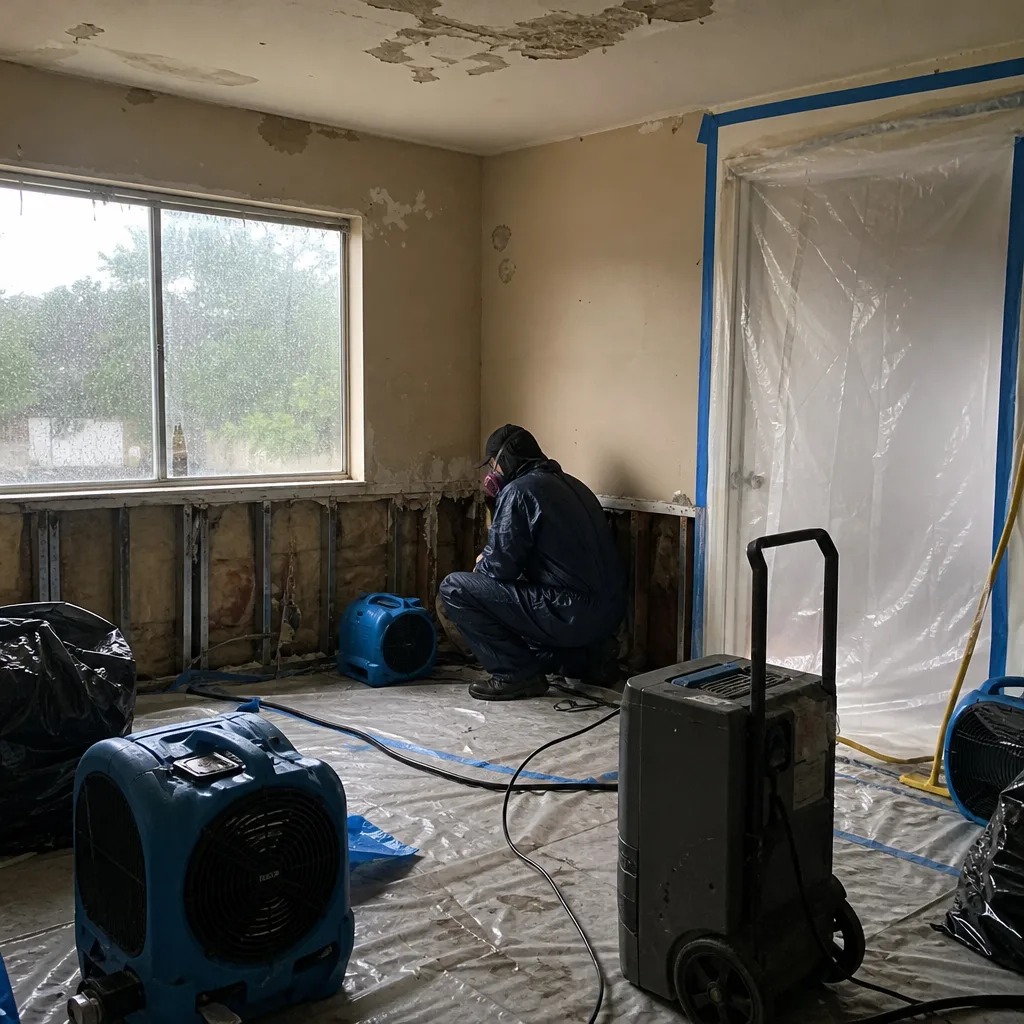 Before
 After
After Before
 After
After Before
 After
After